
Monday · Challenge
The water tray leaks onto the floor by lunchtime. A teacher does not fix it; she asks the room what is happening.

Programs·PreschoolAge 3
At three, questions become investigations. Children make predictions, test ideas, create solutions, work with friends, and use The CAPE Method™ deliberately. Early literacy, mathematics, science and creative work stop being separate subjects and start being tools the investigation needs.

Short cycles. Real materials. Almost nothing on paper.
A problem worth solving
Not a theme, not a topic. Something a three-year-old genuinely cares about, running over a few days.
Materials before worksheets
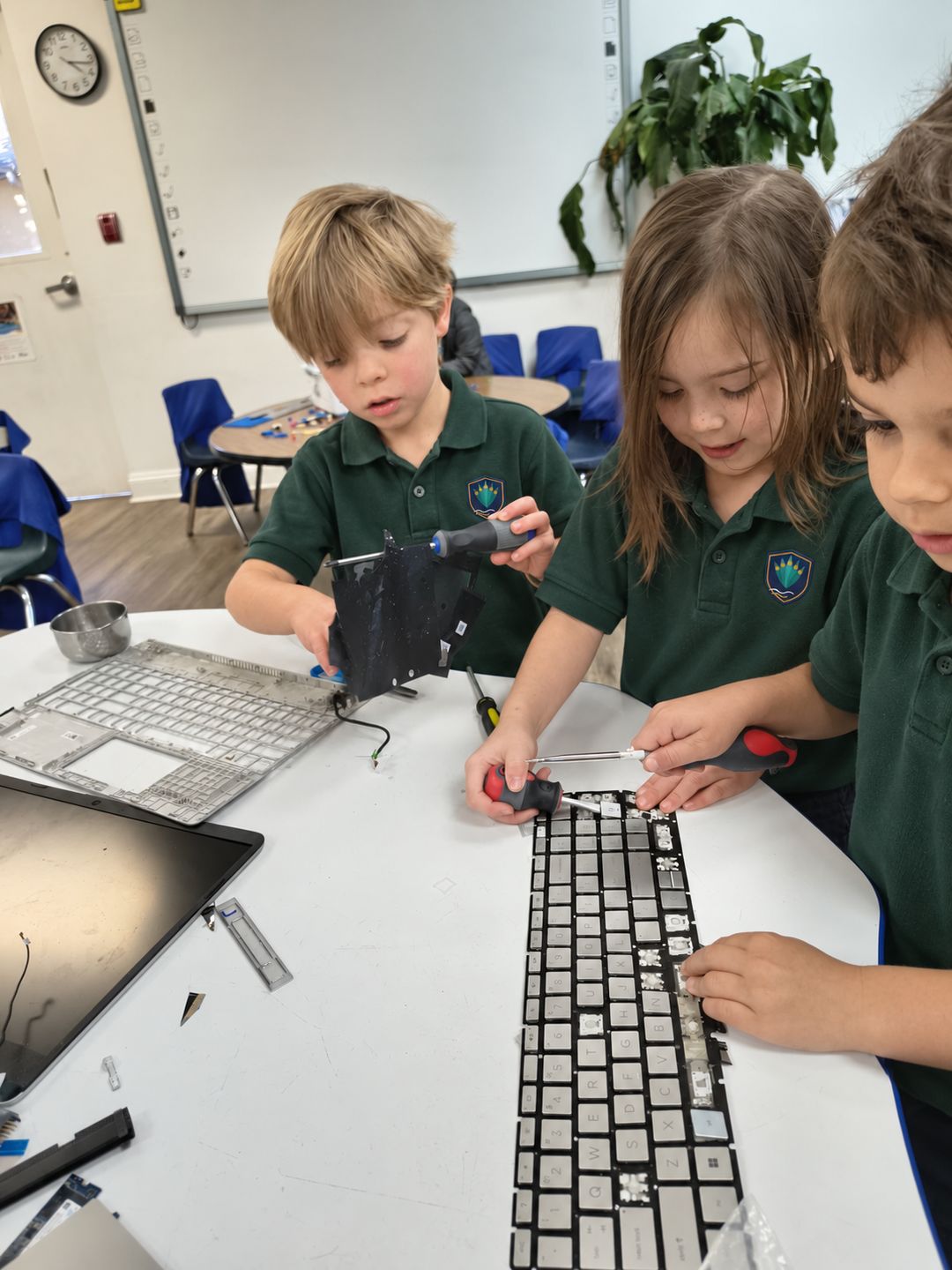
Water, wood, fabric, clay, tape, cardboard. Children handle the real thing before they ever draw it.
Talking through thinking
Predictions said out loud, in front of others, before testing. Being wrong in public — and fine — is a skill built here.
Literacy and number inside the work
Counting because the build needs six. Writing because the sign needs a word. It sticks because it had a reason.
Two-day project blocks
A question doesn't have to end when the day does. Children investigate on Day One, then return on Day Two to revisit ideas, test possibilities, make changes, and take their thinking further.
Early STEAM in action
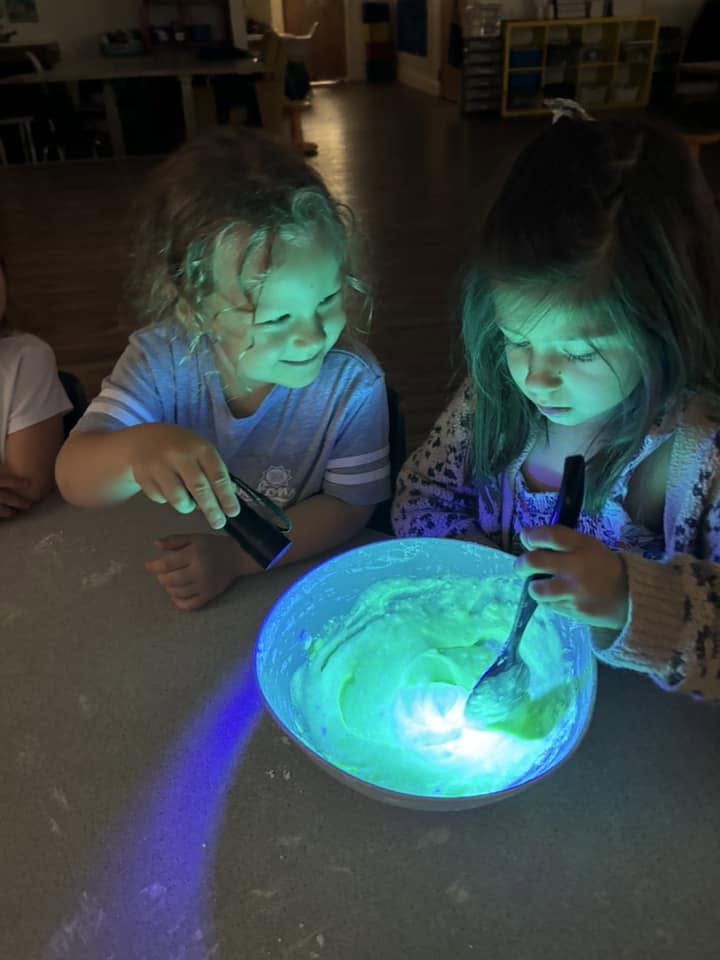
Building, measuring, mixing, observing, designing, and testing give children meaningful experiences with science, technology, engineering, art, and mathematics.
Ideas have a voice
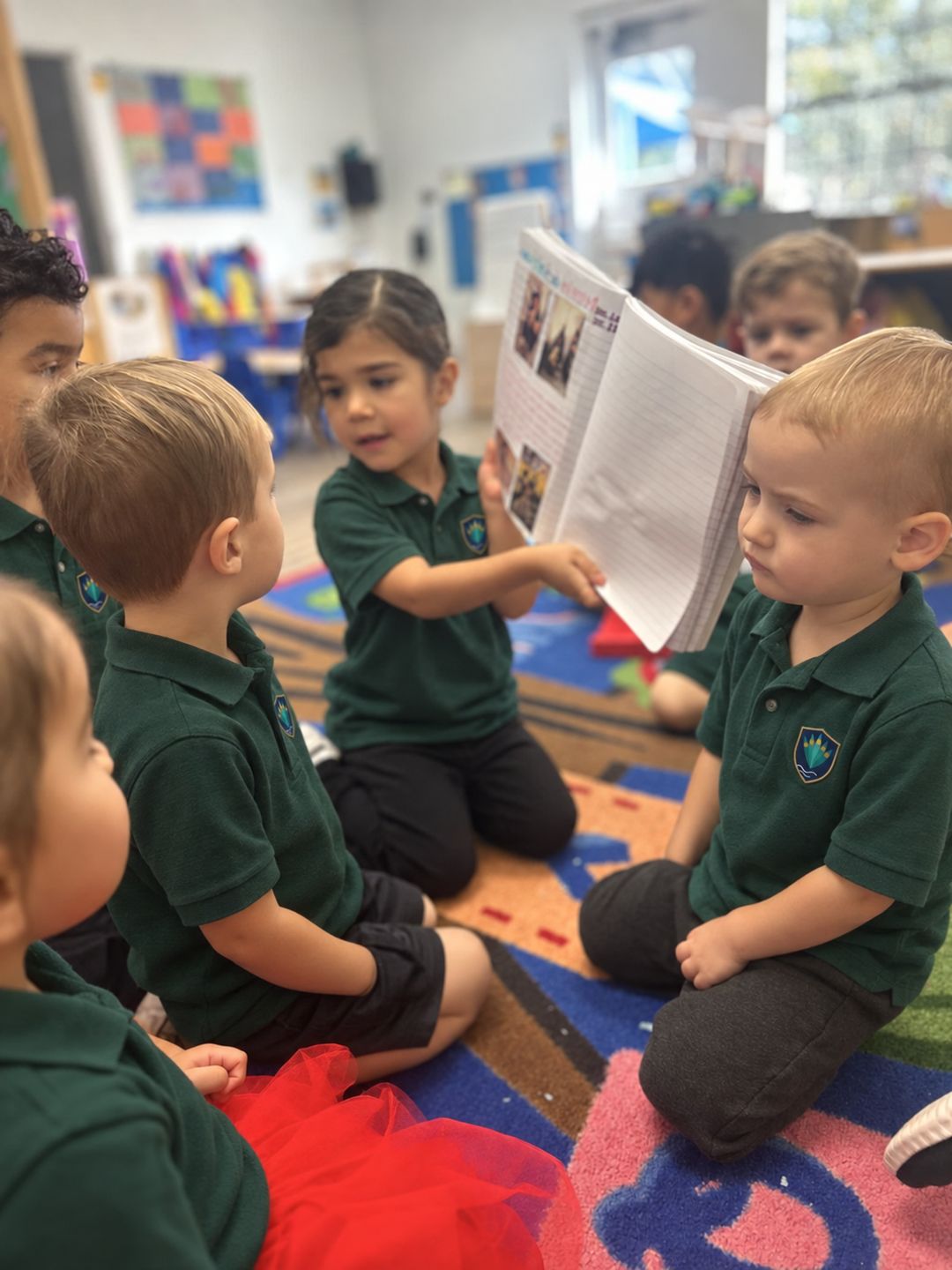
Children explain what they notice, predict what might happen, and share what they created. Speaking about their thinking builds vocabulary, confidence, and early presentation skills.
Create, test, try again
The first idea doesn't have to work. Children learn that they can change a design, try another material, or approach the problem differently. Persistence becomes part of the learning process.
Enrichment is part of the school day—not an add-on to childhood. Preschoolers need opportunities to move, create, perform, explore, and discover new interests. Our enrichment experiences bring different ways of learning into each week.
See the Preschool Room Rhythm of the Day →
Read more on our blog: Preschool in Winter Park, FL — A Guide for Families →
The Winter Park School · Room 9 · Threes & Fours
Preschool · Classroom 1 · Capacity 20 · 7:00 AM–6:00 PM
A predictable rhythm with room for choice, movement and discovery
i noticed something!
7:00–7:30
Greet classmates and settle calmly into the classroom.
7:30–8:00
Busy bags and independent exploration.
8:00–8:30
A short lesson that invites children to notice, wonder and share ideas.
8:30–9:00
Wash hands and enjoy the scheduled classroom snack.
9:00–9:30
Circle, Pledge of Allegiance, mindful movement, calendar, weather and a mindfulness lesson.
9:30–10:00
Writing, stories, vocabulary, names and letters, rhyming and retelling. Small groups rotate to the Big Atelier as scheduled.
10:00–10:30
Counting, sorting, matching, comparing, shapes, patterns and math words.
10:30–11:00
Climbing, balancing, running, dancing and outdoor exploration.
11:00–11:15
Wash hands as needed and transition calmly, with teachers talking alongside children.
11:15–11:30
Explore materials, ask questions, observe, predict, build and test ideas.
11:30–12:00
Wash hands, eat lunch and talk with teachers seated alongside.
12:00–2:00
Rest and quiet activities, responding to each child's needs.
2:00–2:30
Handwashing and afternoon snack, tidying, classroom jobs, making choices and learning about people and places.
2:30–3:00
Mindfulness, yoga and storytime.
3:00–3:30
Design-thinking challenge: imagine, plan, create and share.
3:30–4:00
Outdoor movement and play.
4:00–4:30
Creative arts and STEM lessons for three-year-olds, when space is available.
4:30–5:00
Back in the classroom for a STEAM experience and music.
5:00–6:00
Choice centers, stories and play until families arrive; teachers share a highlight of the day.
Wednesday · Language class
Thursday · Big Atelier class
Friday · Coding and robotics
Check the specialty schedule for current details.
Under the play
At three the structure comes from the adult. What is genuinely the child’s is every decision inside it.
Prediction
"What do you think will happen?" — asked before every test, so the child has something at stake.
Evidence
"How do we know?" Three-year-olds can hold this question, and once they can, they use it on each other.
Revision
The second attempt is the lesson. Teachers keep the first one visible so the child can see the difference they made.
The cycle in miniature
At three, a whole CAPE cycle fits inside a week. Step through one that ran in the age-3 room.
Monday · Challenge
The water tray leaks onto the floor by lunchtime. A teacher does not fix it; she asks the room what is happening.
Tuesday · Anticipate
Wednesday · Produce
Thursday · Evaluate
A lesson from this room
The Puddle Problem started with a puddle by the gate that soaked three pairs of shoes. Over four days the room tested what would soak it up, built a small dam that failed, built a second that held, and argued about whether it counted if the water simply went somewhere else.
read the whole lesson in the Lesson Library →
Small groups, capped by room. Florida VPK is for the year a child turns four, so most three-year-old families are on tuition or a Step Up scholarship this year.
Programs & ages
Every age, one method. Pick a room.
Twenty minutes in this room on an ordinary weekday morning will tell you more than this page can.