
Week one
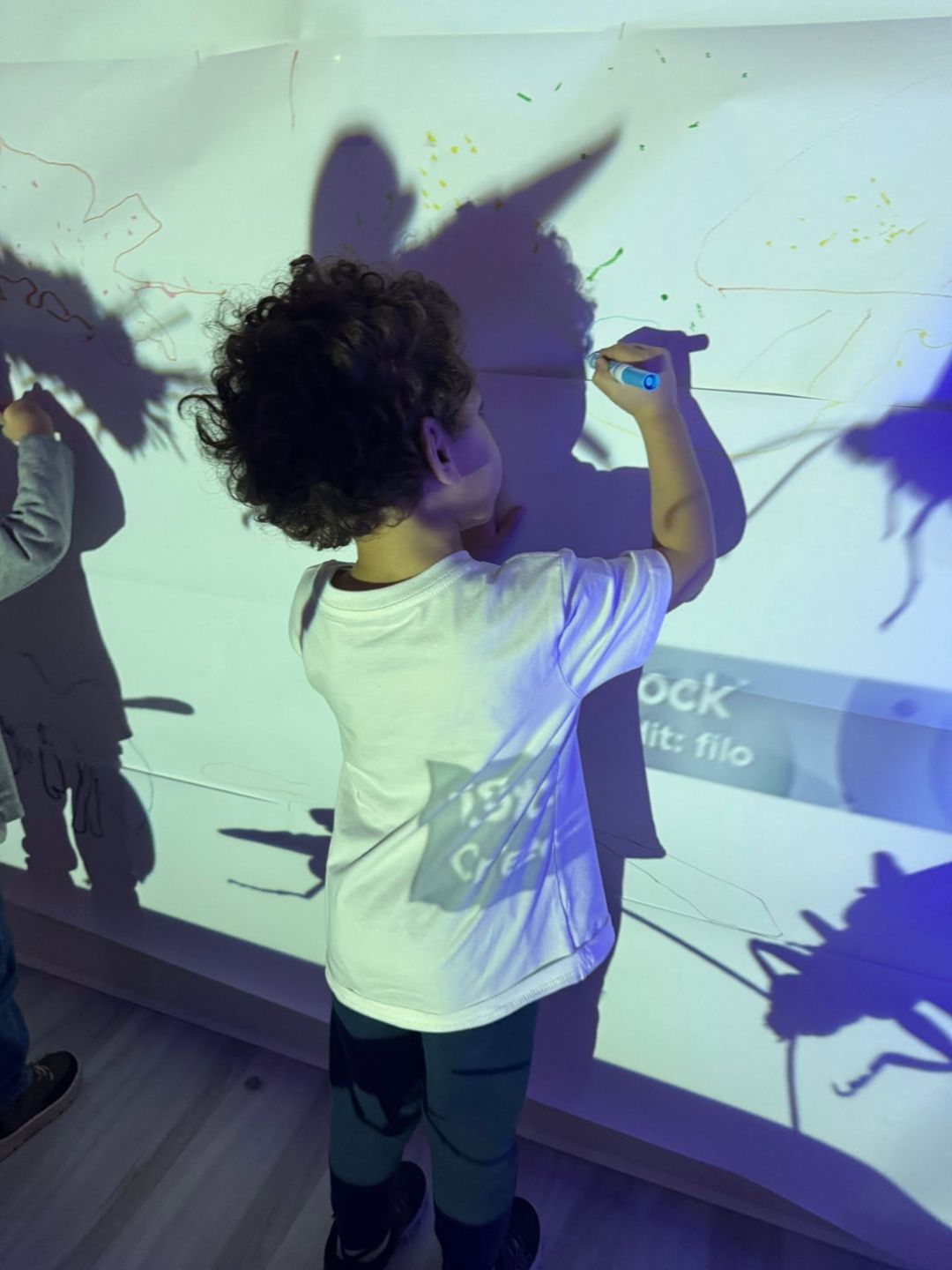
The question arrives and gets narrowed. Children draw what they think they know, and the drawings disagree with each other — which is the useful part.

Programs·Pre-KAge 4 · VPK year
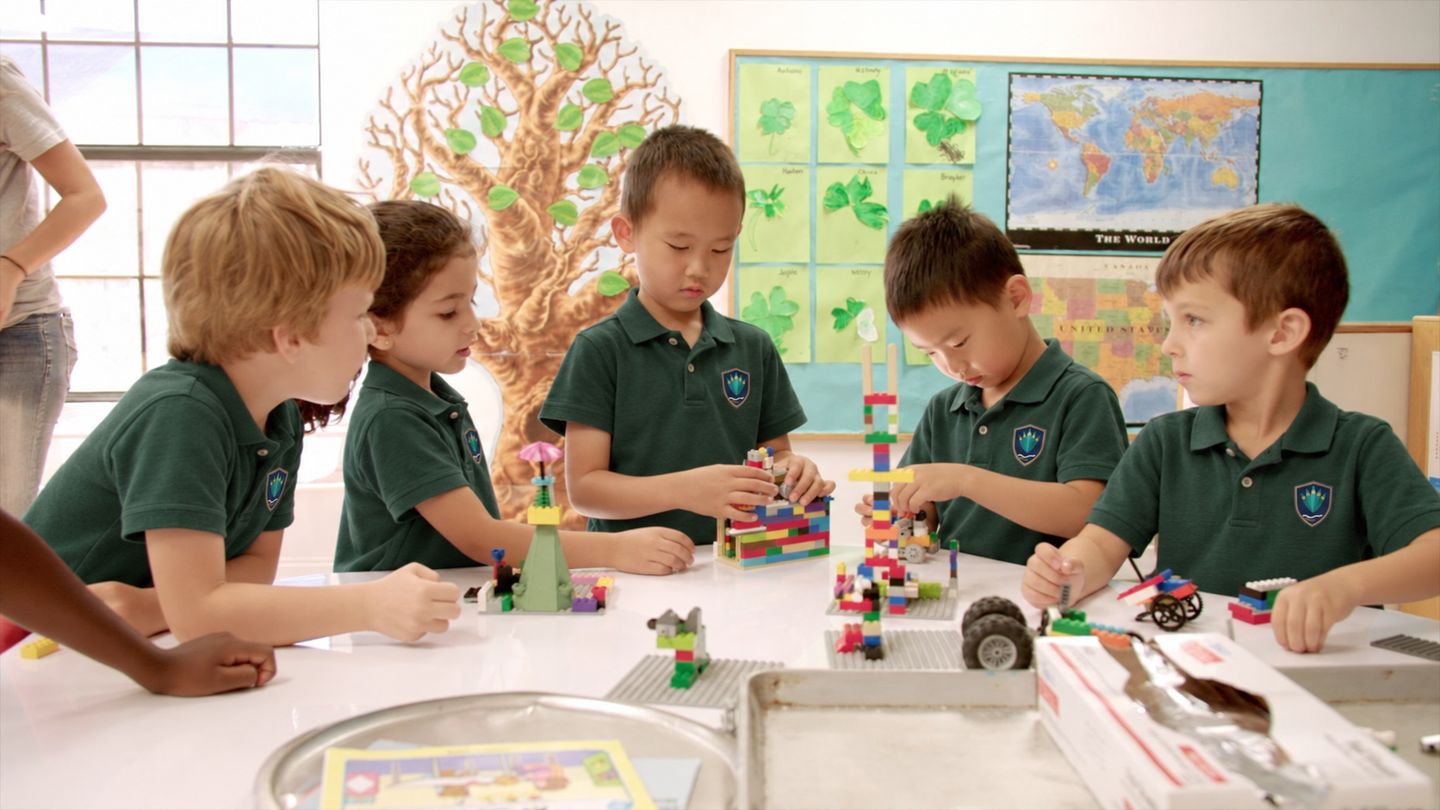
Pre-K children are ready to take their thinking further. Through project-based investigations they ask real questions, gather information, develop ideas, create and test solutions, collaborate and reflect. Academic preparation and independent thinking grow together — not in competition.
Everything children love about preschool—now with deeper projects, stronger academics, and intentional preparation for kindergarten.
Investigations that go deeper
Projects can stretch across multiple days or weeks. Children ask questions, research possibilities, test ideas, encounter problems, make changes, and discover that learning rarely ends with the first answer.
Children choose the approach
One challenge can produce many solutions. Children plan, select materials, test their ideas, compare approaches, and explain why they made their choices.
Literacy with a purpose
Letters, sounds, vocabulary, storytelling, early writing, and comprehension are intentionally developed—and then used in real work. Children write names, labels, signs, plans, stories, and explanations because their ideas need words.
Mathematical thinking every day
Counting grows into number sense, patterns, measurement, comparison, geometry, quantities, and early problem-solving. Math appears in projects, construction, cooking, games, experiments, and everyday classroom life.
Presenting & explaining ideas
Children regularly share what they created, explain their thinking, answer questions, and listen to the ideas of others. These early public-speaking experiences build communication skills and confidence.
STEAM becomes problem-solving
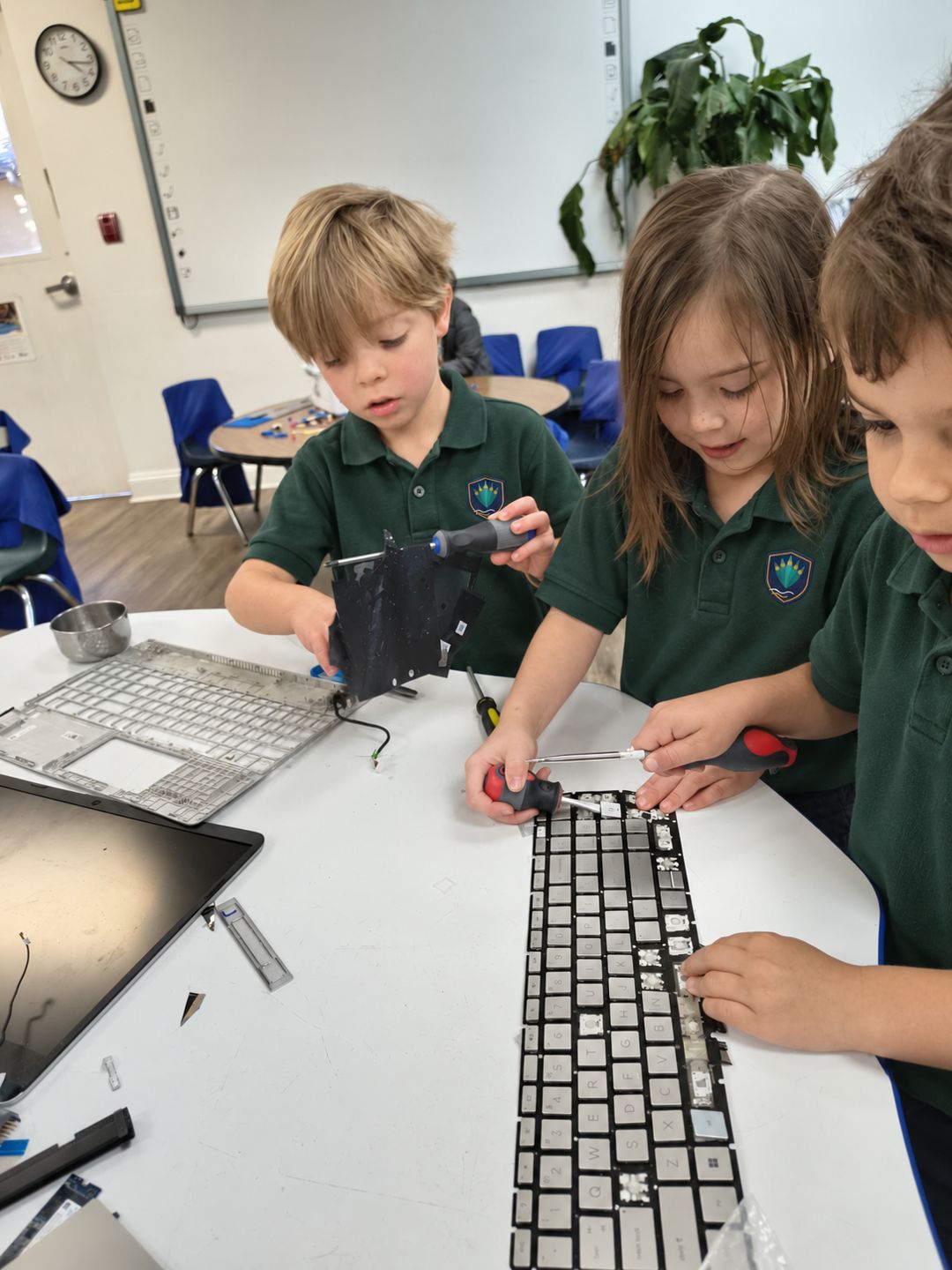
Children design, build, measure, observe, experiment, test, and redesign. Science, technology, engineering, art, and mathematics come together around meaningful questions and challenges.
Independence for kindergarten
Children practice managing belongings, following multi-step directions, completing responsibilities, transitioning between activities, caring for materials, and working independently for increasingly longer periods.
Ready for kindergarten—and ready to learn
Kindergarten readiness includes letters, sounds, early reading and writing, number sense, fine-motor development, and classroom routines. It also means being able to ask questions, communicate ideas, collaborate, solve problems, and keep trying when something is difficult.
The enrichment stays
Spanish · Music & Movement · Art & Atelier · Physical Education · STEAM · Public Speaking · Life & Trade Skills · Community Experiences. Getting ready for kindergarten doesn’t mean the fun stops—it is still how children learn best.
The Winter Park School · Pre-K
7:00 AM–6:00 PM · Morning learning becomes afternoon making
let’s test it again.
7:00–8:00
Arrival, classroom connection and independent choices, with a STEM exploration center open.
8:00–8:30
Thinking routines and observation.
8:30–9:00
Wash hands and enjoy the scheduled classroom snack.
9:00–9:30
Mindfulness, calendar and community, starting with a 5-minute music and movement warm-up.
9:30–9:45
Literacy, language and early writing.
9:45–10:00
Counting, patterns, shapes, sorting and comparison.
10:00–10:30
Bathroom breaks and handwashing.
10:30–11:00
Creative arts and cognitive and scientific explorations.
11:00–11:30
Playground and gross-motor play.
11:30–12:00
Storytime and social-emotional learning.
12:00–1:00
Wash hands, eat lunch with teachers seated alongside, then rest.
1:00–1:30
Yoga and mindfulness practice.
1:30–2:00
Afternoon snack, life skills and social-emotional learning.
2:00–3:00
Apply morning learning through design, building and problem-solving.
3:00–4:00
Create, test ideas and explore materials.
4:00–4:30
Outdoor movement and play.
4:30–5:00
Singing, rhythm, instruments and dance.
5:00–5:30
Build, observe, predict and test ideas with hands-on materials.
5:30–6:00
Art and creative play until families arrive; teachers share a highlight of the day.
No food from home after 8:00 a.m. Snacks and lunch stay at the times listed.
Wash hands before meals, after the playground and after toileting.
Teachers sit with children at meals and engage during transitions. Participation is encouraged, not required.
Kindergarten readiness
Our Pre-K program intentionally develops the academic, social, emotional, physical, and learning skills children need for a successful transition to kindergarten.
Early literacy
Letter recognition, letter-sound relationships, phonological awareness, vocabulary, comprehension, storytelling, name writing, and emerging writing.
Early mathematics
Number recognition, counting, quantities, number sense, patterns, shapes, measurement, comparison, spatial reasoning, and early problem-solving.
Writing & fine-motor skills
Drawing, writing, cutting, manipulating tools, building, and working with varied materials strengthen the coordination children need for kindergarten tasks.
Independence & executive function
Following multi-step directions, managing belongings, completing tasks, transitioning between activities, making choices, and developing sustained attention.
Social & emotional readiness
Communicating needs, managing emotions, collaborating, navigating disagreements, waiting, listening, and participating successfully in a classroom community.
Communication & confidence
Asking questions, speaking in a group, explaining ideas, listening to others, presenting work, and developing confidence in their own voice.
A three-week investigation
By four, a challenge outlives the week it started in. Here is the shape of one, week by week.
Week one
The question arrives and gets narrowed. Children draw what they think they know, and the drawings disagree with each other — which is the useful part.
Week two
Week three
A lesson from this room
The Bird Feeder Challenge: the birds in the courtyard would not come to the first feeders. Children redesigned three times over three weeks — height, seed, and finally the squirrel problem, which nobody had predicted and which took the longest.
a recent challenge · see the lesson in the Lesson Library →
This is the Florida VPK year — free for eligible four-year-olds, applied for through the Orange County Early Learning Family Portal. We can walk you through it.
Programs & ages
Every age, one method. Pick a room.
Twenty minutes in this room on an ordinary weekday morning will tell you more than this page can.