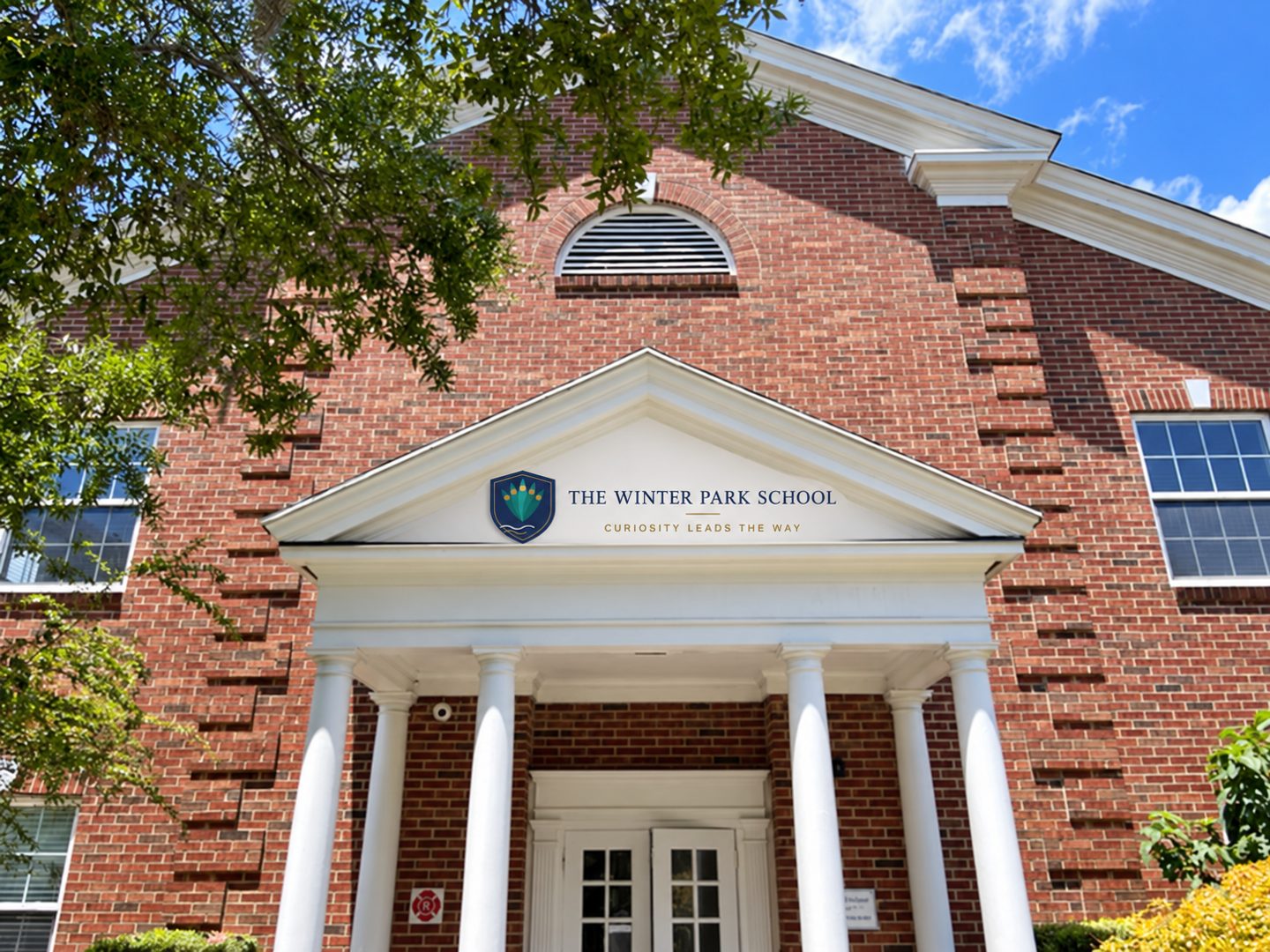
At The Winter Park School, a preschool and early elementary school located just one block from Park Avenue in Winter Park, Florida, we believe some of the most meaningful learning happens when children connect what they learn in the classroom to the world around them. Through community experiences, hands-on projects, local partnerships, service opportunities, and exploration, Winter Park itself can become an extension of the classroom.
A lesson about plants becomes more meaningful when children can observe nature firsthand. A conversation about community becomes real when they meet the people who help it thrive. Math has a different purpose when children see how it is used in everyday life. And lessons about kindness and responsibility become more powerful when children have opportunities to help others.
That's why one of the ideas at the heart of our approach is simple:
The community can become the classroom.
And our location makes that philosophy especially meaningful.
The Winter Park School is located just one block from Park Avenue, placing our students close to the parks, businesses, architecture, cultural experiences, community organizations, events, and people that make Winter Park such a distinctive place to live and learn.
For us, Winter Park isn't simply our school's address. It's an extension of our learning environment.
Learning Doesn't Have to Stop at the Classroom Door
Children need strong classrooms, thoughtful teachers, engaging curriculum, and intentional learning experiences.
But they also need opportunities to see how what they're learning connects to real life.
That's where community-based learning becomes powerful.
- A walk through the neighborhood can become an observation exercise.
- A visit with a local business owner can introduce children to entrepreneurship.
- A park can become a science laboratory.
- Architecture can inspire questions about mathematics, engineering, history, and design.
- A community service project can introduce children to empathy, responsibility, and leadership.
Instead of separating school from the world around children, we can intentionally connect the two.
One Block from Park Avenue. A World of Learning Around Us.
Our location just one block from Park Avenue gives us an extraordinary opportunity to do that.
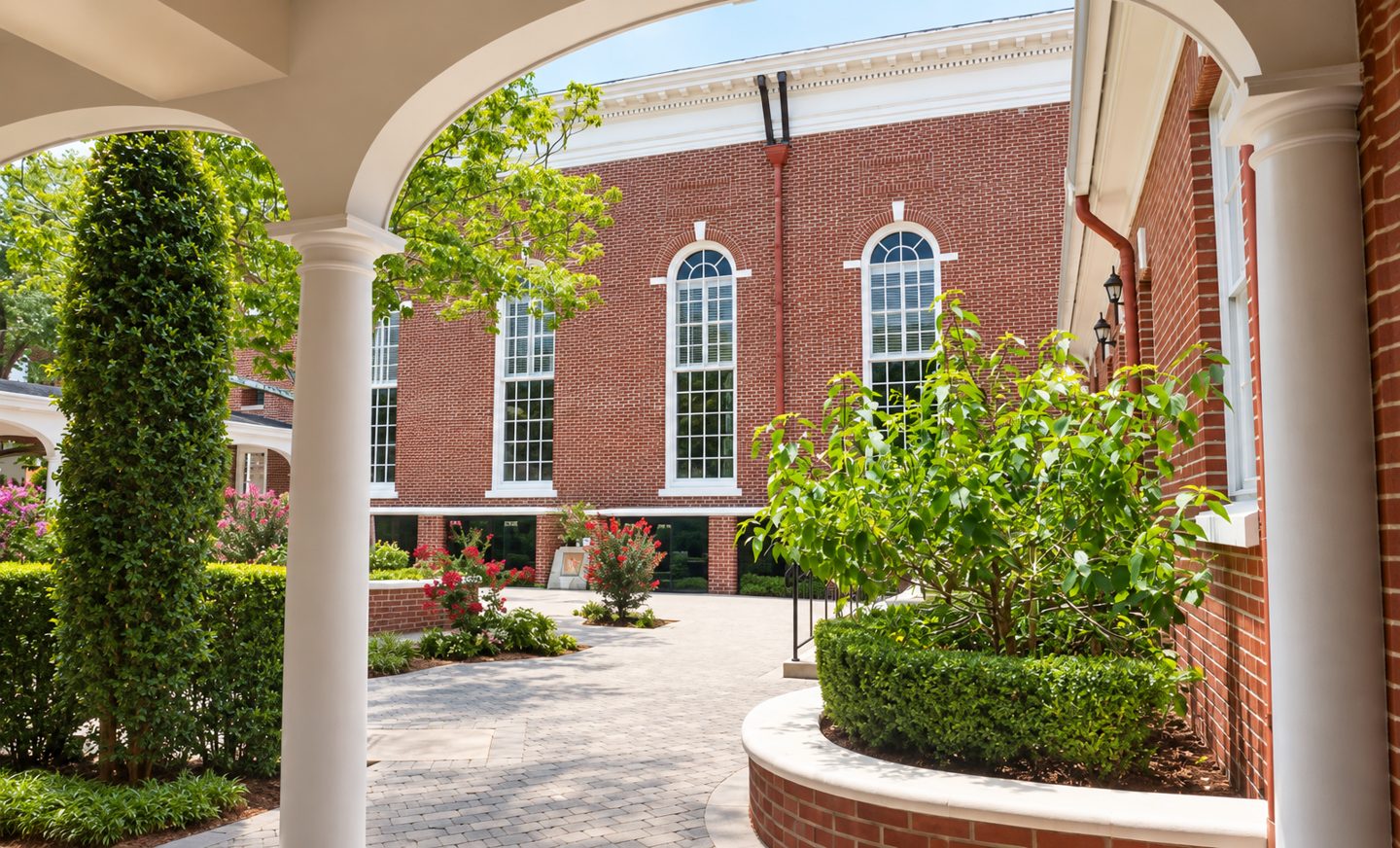
Imagine a group of children walking through Winter Park while studying buildings and design. They notice arches, windows, columns, signs, landscaping, materials, shapes, patterns, and colors.
Their teachers aren't simply telling them what to notice. They're asking questions.
- Why do you think they designed the building that way?
- What shapes can you find?
- What materials were used?
- How would you design your own building?
Back at school, those observations might become drawings, models, measurements, research, conversations, or an entirely new project.
Another day, children might be investigating businesses. Being close to Park Avenue means entrepreneurship isn't an abstract idea. Children can begin noticing storefronts, restaurants, services, signs, products, customers, and the people who operate businesses.
They can begin asking:
- What does this business do?
- Who does it help?
- Why would someone start a business like this?
- What would we need if we created our own?
Suddenly, literacy, mathematics, communication, creativity, and problem-solving are working together. That's the kind of learning we want children to experience.
From Field Trips to Field Experiences
We also think differently about traditional field trips. A field trip can be fun—and childhood should absolutely include fun. But an experience outside the classroom can also become part of a larger investigation.
We think of these as field experiences: opportunities intentionally connected to what children are exploring at school.
- Children might investigate plants and ecosystems before exploring a local green space.
- A project about community helpers could include conversations with people who serve Winter Park.
- A study of art might lead children to observe public art, architecture, or a cultural institution.
- Older students studying entrepreneurship might visit a business and later create their own product, service, or school-based enterprise.
The important part is what happens before and after the experience. Children prepare questions. They observe. They gather information. They return to school with new ideas. Then they create something from what they discovered.
Bringing CAPE™ Into the Community
These experiences naturally connect to the CAPE™ learning process within our Innovation Advantage™ approach: Challenge → Analyze → Produce → Evaluate.
- Challenge — Learning can begin with a question, problem, observation, or curiosity. How does a business decide what to sell? Why are some buildings designed differently from others? How can we help people in our community?
- Analyze — Children investigate. They observe, ask questions, compare, count, interview, read, research, discuss, and gather information.
- Produce — Then they do something with what they've learned. They might build a model, create a presentation, design a product, write a story, make artwork, develop a solution, organize a project, or present an idea.
- Evaluate — Finally, children reflect. What worked? What did we discover? What surprised us? What would we do differently? What question do we have now?
This means a walk through Winter Park isn't simply a walk. It can become the beginning of an entire learning experience.
Children Should Know the People in Their Community
Community-based learning is also about relationships. We want children to understand that a community is made up of people with different talents, responsibilities, professions, and ways of contributing.
- Business owners.
- Artists.
- Educators.
- First responders.
- Healthcare professionals.
- Civic leaders.
- Tradespeople.
- Entrepreneurs.
- Volunteers.
- College students and professors.
- Neighbors.
When children interact with people doing real work, they begin to understand something that can be difficult to teach through a worksheet: learning has a purpose.
Instead of only asking children, “What do you want to be when you grow up?” we can help them explore much bigger questions.
- What problems do people solve?
- How do different jobs help a community?
- What skills do people need?
- What problems would I like to solve?
- What could I create?
- How could I contribute?
Those questions help children begin seeing themselves not simply as students, but as people capable of having ideas and making a difference.
Learning Through Service and Philanthropy
The community shouldn't only be something children learn from. It should also be something they learn to contribute to. That's why service, volunteer opportunities, and age-appropriate philanthropy can become another part of community-based learning at The Winter Park School.
Children might collect needed items for a local organization, participate in an environmental project, create something for community members, support a local cause, or develop their own class project around a need they identify.
For younger children, these experiences can begin very simply. For older children, they can become increasingly sophisticated projects involving research, planning, communication, teamwork, budgeting, and presentation. The size of the project isn't what matters most.
I am part of a community, and I can contribute to it.
Building Confidence Through Real Experiences
Community experiences also give children opportunities to practice skills that are difficult to develop exclusively inside a classroom.
- Introduce themselves.
- Ask questions.
- Listen to someone else's perspective.
- Speak with adults.
- Work with classmates.
- Navigate unfamiliar environments.
- Observe carefully.
- Practice appropriate behavior in public spaces.
- Solve unexpected problems.
- Communicate what they've learned.
These experiences can help children develop confidence, independence, communication, collaboration, adaptability, and leadership alongside academic knowledge.
Winter Park as a Learning Ecosystem
One of the things that makes our location so exciting is the variety of experiences surrounding our school. Park Avenue and the surrounding Winter Park community offer opportunities to explore commerce, art, architecture, nature, history, culture, service, and civic life. Nearby institutions and community organizations can expose children to ideas and people they may not otherwise encounter.
The possibilities grow even further as children get older. A preschooler's community walk might focus on colors, shapes, signs, plants, sounds, and community helpers. An elementary student could investigate architecture, conduct an interview, study the economics of a local business, participate in a service project, or develop a presentation based on a community problem.
The community grows with the child.
You can see what this looks like at every age: infant care, toddler care, preschool, Pre-K and kindergarten — or start with our guide to preschool in Winter Park, FL.
Connecting School, Family, and Community
We also want families to feel that connection. A strong school shouldn't operate as an island. Parents, teachers, businesses, community organizations, cultural institutions, colleges, nonprofits, and civic organizations all have knowledge and experiences that can enrich children's learning.
- A parent might share expertise from a profession.
- A local entrepreneur might talk about starting a business.
- An artist might demonstrate a creative process.
- A community organization might introduce students to a local need.
- A college or cultural institution might open the door to a completely new area of curiosity.
When those relationships develop, children begin to see something powerful: the adults around them are all potential teachers.
Preparing Children for a Changing World
There is also a larger reason this approach matters. Children are growing up in a world where information is increasingly easy to access. Knowing information will remain important, but children will also need to know what to do with information.
- Ask thoughtful questions.
- Analyze what they discover.
- Communicate ideas.
- Collaborate.
- Create.
- Solve problems.
- Adapt.
- Reflect.
- And understand the people and communities around them.
Those abilities aren't developed by memorization alone. They develop through experience. That's why our approach combines academics with projects, exploration, communication, creativity, and authentic experiences.
A School That Belongs to Winter Park
We want The Winter Park School to be more than a school located in Winter Park. We want it to be a school that belongs to Winter Park.
- A place where local organizations know our children.
- Where businesses and community leaders can become partners in learning.
- Where families feel connected.
- Where children develop an appreciation for the community around them.
- And where students gradually learn that they have something to contribute to that community, too.
Being one block from Park Avenue gives us an incredible starting point. The world our children are learning about isn't miles away. It's right outside our door.
Because Sometimes the Best Classroom Doesn't Have Four Walls
At The Winter Park School, learning can happen around a classroom table, in our Ideas Studio, during a project, in conversation with a teacher, outside in nature, while walking through the community, or while meeting someone whose work inspires an entirely new question.
We want children to understand that learning isn't something that happens only during a lesson. It's something they can do everywhere.
- Notice.
- Question.
- Investigate.
- Create.
- Contribute.
- And then ask another question.
Because when curiosity leads the way, the entire community can become a classroom.